Now that I have built up a comfortable amount of posts, I am going to reduce the minimum number of posts per week to 3. While I will still produce 1+ game reviews and 1+ strategy articles a week, I am going to be focusing on searching for an entry level position in board gaming, making my own games, and beautifying the blog a bit more.
Game Reviews, Strategy Articles, and More
Medieval Academy Review
Foreword
Medieval Academy is my go-to game for introducing people to drafting, which is one of my favorite game mechanisms. The game is short, fun, and easy to grasp.
Drafting
There are 2 major forms of drafting: simultaneous hidden drafting and sequential open drafting. Medieval Academy uses simultaneous hidden drafting.
Simultaneous Hidden Drafting
In this form of drafting, every player starts with an equal number of hidden resources, usually cards. Each player simultaneously picks a resource (keeping it hidden) and then passes the remaining resources to the player on their left (sometimes right). This then continues until there are no resources remaining to pass.
For example, in Medieval Academy each player starts with 5 cards. Everyone picks a card and passes the remaining 4 to the player on their left. Then everyone picks a card from the 4 passed to them, followed by the remaining 3 cards being passed, etc.
Simultaneous hidden drafting is also used in Epic’s cube draft and dark draft formats, Magic: The Gathering’s 8 player draft, Sushi Go!, Seasons, and 7 Wonders.
Sequential Open Drafting
This form of drafting is not used in Medieval Academy. Sequential open drafting involves a set of resources available to all players. Players then take turns selecting resources. This is usually done by “snaking” between the players. For example, in a 4 player game with Adam, Becky, Carl, and Diana the order could go like this:
Adam picks 1st
Becky picks 2nd
Carl picks 3rd
Diana picks 4th
Diana picks 5th
Carl picks 6th
Becky picks 7th
Adam picks 8th
Adam picks 9th
etc.
Some other games that use Sequential open drafting include Epic open draft format, Catan (opening settlement placement), Smash Up (official faction selection), and Heroscape (unit selection).
How to Play
Goal
The goal of Medieval Academy is to compete in 7 categories to become the best knight.
Set Up
Lay out the boards as shown in the picture below.
Place the respective coat of arms markers near their respective boards.
Each player chooses a color and places one of their discs on the first space on each board; order does not matter on the first space of a board.
Place the hourglass marker on the first spot on the draft direction board.
According to the rulebook, the player who strikes the most chivalrous pose takes Excalibur to determine the first player.
The Round
This game consists of 6 rounds with 3 parts.
Drafting Cards
This game uses simultaneous hidden drafting described above. At the start of each round, each player is dealt 5 cards. Players simultaneously draft 1 card at a time and then pass the remaining cards. (The direction the cards are passed changes after each round. The hourglass marker keeps track of the current direction.) This continues until each player has drafted 5 cards.
There are 6 types of cards available for drafting. Each type of card corresponds to one (or two in the case of Jousts and Tournaments) boards in play. Each type of card ranges from a value of 2 to a value of 5 (except Jousts and Tournaments which have no 2s). 5 is the best value. 4 of these 5 cards will be played in the next phase to advance a player on that respective board.
Playing Cards
Once everyone has finished drafting, players take turns playing a card. Each card advances a player’s disk a number of spaces on a single board. You can never split movement. For Jousts and Tournaments, they share the same card, but you can use it for either board. If your movement would put you on top of another player’s disk, you are ahead of that player. You continue this process until everyone has played 4 of their 5 cards.
Scoring Boards
After the final card is played in a round, certain boards score. Each board (except Jousts and Tournaments) scores differently. You either want to be ahead of other players or at a certain point on the board. The 7 boards are as follows:
- Gallantry: This board scores every round, and it is the first board to score. The 1st, 2nd, and 3rd place (in a 4+ player game) finishers are able to advance any one of their disks. First, the 3rd place finisher advances 1 piece 1 space. Then, the 2nd place finisher advances 1 piece 2 spaces. Finally, the 1st place finisher advances 1 piece 3 spaces.
- Jousts/Tournaments: These boards score every round. The player in 1st gets 3 points, 2nd gets 2 points, and 3rd gets 1 point.
- Education: This board scores every round. The player in last gets -3 points. The player in 2nd to last gets -1 point.
- King’s Service: This board scores on the 3rd and 6th rounds only. Relative position does not matter on this board. If you make it to at least space 6, you get 6 points. If you make it to space 12, you get 12 points.
- Quests: This board only scores on the 6th round. The player in 1st gets 17 points, 2nd gets 10, and 3rd gets 4.
- Charity: This board only scores on the 6th round. The player in last gets -10 points, and the player 2nd to last gets -5 points.
After round 3, the Gallantry, Jousts, Tournaments, Education, and King’s Service boards reset. All disks on those boards are returned to the first spot of that board. Play then resumes as normal.
Points you get (positive and negative) are kept face down so no one can check a player’s current score. All players on the start space are tied for last. This means that if you are on the starting spot you can not gain points, and you always lose the maximum amount of points. As a reminder, being on top of another piece means you are ahead of that piece, just not for the starting space.
Game End
The game ends after the final scoring of the 6th round. After that, everyone adds up all of their points. The player with the most points wins.
Conclusion
I stumbled across a demo of this at Gen Con, and I had to buy it. Drafting is one of my favorite game mechanisms, and I think this is a very good introduction to it. This isn’t one of my favorite games since it is fairly light, but I do enjoy playing it. More importantly, I am able to get more people to play a drafting game with me.
It is also pretty satisfying when you put your disk directly on top of another player’s. Generally, it doesn’t feel that awful when someone puts their piece on top of yours though. Most games are also fairly close, and it is not a long game either.
I haven’t experimented much with the variants the game includes. In my next game, I plan on trying out at least a couple. The one that seems the most interesting is the dueling knights as opposed to the Jousts and Tournaments boards. In the dueling knights variant, you can support either or both of the knights. The knight that gets the most support awards more points. While the game works perfectly well without the variants, adding them in could give the game enough depth for it to get more play.
Currently, I frequently introduce this as a new game, especially if the players have never drafted before. Without adding in the variants, it isn’t a game I want to play all of the time, and I do not know if the variants will change that. However, I believe I have more than got my money’s worth out of this game, and I am happy with the purchase. This game will definitely be seeing more play.
Constructed Epic: Who Needs Allies or Loyalty
Foreword
I wanted a deck that ran 15 of each faction. This is that deck.
First Shot Deck List
Evil (15)
Slow (0)
Fast (10)
3x Bitten
3x Final Task
3x Plague
1x Zombie Apocalypse
0-Cost (5)
3x Corpse Taker
2x Wither
Good (15)
Slow (4)
3x Palace Guard
1x Thundarus
Fast (6)
3x Cease Fire
3x Resurrection
0-Cost (5)
3x Brave Squire
2x Watchful Gargoyle
Sage (15)
Slow (4)
1x Frost Giant
3x Sea Titan
Fast (6)
3x Erase
3x Wave of Transformation
Wild (15)
Slow (4)
3x Kong
1x Triceratops
Fast (6)
3x Hurricane
3x Surprise Attack
First Shot Explanation
While this deck isn’t terribly serious, I do like it. This deck is designed to exploit Kong, Palace Guard, and Sea Titan. All of these champions remove a champion when they come into play and leave a body (big bodies for Kong and Sea Titan). I then also bring 3 Resurrections and 3 Corpse Takers to reuse them. 3 Surprise Attacks are also included to get them into play. 3 Final Tasks can get solid blitz damage in or a block + removal.
3/11/16 Rework Deck List
Evil (9)
Slow (0)
Fast (6)
3x Final Task
3x Plague
0-Cost (3)
3x Corpse Taker
Good (12)
Slow (3)
3x Palace Guard
Fast (8)
3x Cease Fire
2x Inner Peace
3x Resurrection
0-Cost (1)
1x Watchful Gargoyle
Sage (15)
Slow (4)
1x Frost Giant
3x Sea Titan
Fast (6)
3x Erase
3x Wave of Transformation
Wild (24)
Slow (6)
3x Kong
3x Triceratops
Fast (10)
3x Hurricane
1x Lightning Storm
3x Lurking Giant
3x Surprise Attack
0-Cost (8)
3x Flash Fire
2x Lash
3x Rage
3/11/16 Rework Explanation
Removed: Bitten, Zombie Apocalypse, Wither, Thundarus, and Brave Squire
Added: Inner Peace, Lightning Storm, Lurking Giant, and Flash Fire
This deck actually worked fairly well when I played it, so I decided to forgo my 15/15/15/15 requirement to try to make it better. The strength of this deck is in abusing Palace Guard, Sea Titan, and Kong. Corpse Taker, Resurrection, and Final Task allow me to replay them, and the rest of the cards are just strong.
Flash Fire is one of the best cards in my opinion, and it was an easy replacement for Wither. It also helps to clear out chump blockers for an attack by one of my big champions.
Lurking Giant is an 11/11 ambush. I included this because it is another big Hurricane-surviving champion, and it can be played on my opponent’s turn. All of my other champions need a Surprise Attack.
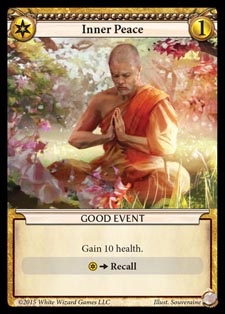
Inner Peace is the most interesting card I added. This does have an ally effect so it messes with the deck’s name, but I think it will fit well. Since I am abusing those 3 champions, I have big champions and strong removal. I also have a lot of ways to deal with tokens, and a lot of ways to draw cards. In other words, I believe that I can afford to bring/play 2 cards exclusively to heal and not fall behind.
Lightning Storm is just strong in general.
Epic Tyrants Expansion Announced
Epic Tyrants, the first expansion, has been announced. Information can be found on their website here: www.epiccardgame.com/epic-tyrants-expansion-coming-to-stores-march-22nd/
Epic Worlds Announced
White Wizard Games has announced their $100,000 prize pool tournament. The information can be found at their website here: http://www.epiccardgame.com/worlds/
I plan on attending Origins and Gencon for the currently announced qualifiers. For those of you planning on attending, good luck and I’ll see you there.
Constructed Epic: Burn
Foreword
Burn decks try to reduce a player’s health to 0 primarily with direct damage. I hate burn decks. Here’s mine.
First Shot Deck List
Good (6)
Slow (0)
Fast (4)
3x Ceasefire
1x Inheritance of the Meek
0-Cost (2)
2x Watchful Gargoyle
Sage (18)
Slow (0)
Fast (12)
3x Erase
3x Lying in Wait
3x Memory Spirit
3x Wave of Transformation
0-Cost (6)
3x Forcemage Apprentice
3x Hasty Retreat
Wild (36)
Slow (3)
3x Raging T-Rex
Fast (21)
3x Flame Strike
3x Forked Lightning
3x Hunting Raptors
3x Lightning Storm
3x Pyromancer
3x Rain of Fire
3x Strafing Dragon
0-Cost (12)
3x Cave Troll
3x Fire Shaman
3x Fireball
3x Flash Fire
First Shot Explanation
This deck is fairly simple. Ideally, you want to play a 1-cost burn spell directly against your opponent on your turn. If you have enough high damage burn, you can play burn on your opponent’s turn too. It is possible to beat your opponent in two turns this way.
Since there are not enough burn cards to make a full deck currently, the rest of the deck is designed to disrupt your opponent on their turn. This deck has bounce, non-targeting Banish, airborne ambush chump blockers, and Cease Fire.
Burn decks’ weakness is health gain. Inner Peace can shut this deck down, especially since it has no discard banish. Angel of Light is 10 health and a 5/6 flyer. It also can’t be bounced since it would gain your opponent another 10 health. Righteous champions, Avenging Angel and Gold Dragon, must be removed.
I dislike burn decks because they don’t require much thought to play, they radically change how the game plays, and it is frustrating to lose to them. This is included here so people know to watch out for them. As more ways to deal direct damage are added, this deck archetype could continue to get stronger. For example, the kickstarter promos include Aftershock, Searing Blast, and Owl Familiar.
3/11/16 Playtest Notes
This deck kills quickly with a strong draw. In the games I have played with it so far, it was basically unstoppable. Since I hate burn decks, these are the best ways to beat this deck. This deck hasn’t played against a deck that employed either yet.
The biggest weakness of this deck is that it can run out of steam. Since a lot of the burn only does damage without improving your board position, you can deplete your hand and lose board position quickly. Depleting your hand also makes it less likely that you will be able to trigger the critical Loyalty 2 effects from Raging T-Rex, Hunting Raptors, and Strafing Dragon. All 3 of those cards are basically worthless for this deck without loyalty. Therefore, Psionic Assault and Thought Plucker could do work in disrupting this deck. If they run out of steam prematurely, you have a strong chance of winning.
The second way to force a burn deck to run out of steam is health gain. Angel of Light, Inner Peace, Avenging Angel, Gold Dragon, Priestess of Angeline, and, to a lesser extent, Vital Mission, Drain Essence and Unquenchable Thirst all work for this purpose. For instance, if you have an Inner Peace you can out pace even Flame Strike. In addition, you don’t lose card advantage since this deck can’t stop you from recalling Inner Peace.
As of now, I see no changes that need to be made. If you run this deck, make sure you hold onto your 0-cost cards until needed. If you use them too early, you won’t be able to power your Loyalty 2 effects later. I also generally would not recommend playing this deck in casual games. If you do, people might not want to play against you, since it isn’t particularly fun to play against.
Tyrants Initial Rework Decklist (3/29/16)
Good (3)
Slow (0)
Fast (3)
3x Ceasefire
0-Cost (0)
Sage (24)
Slow (0)
Fast (18)
3x Crystal Golem
3x Erase
3x Lesson Learned
3x Memory Spirit
3x Temporal Shift
3x Wave of Transformation
0-Cost (6)
3x Forcemage Apprentice
3x Hasty Retreat
Wild (33)
Slow (0)
Fast (24)
3x Draka’s Fire
3x Flame Strike
3x Forked Lightning
3x Hunting Raptors
3x Lightning Storm
3x Pyromancer
3x Rain of Fire
3x Strafing Dragon
0-Cost (9)
3x Fire Shaman
3x Fireball
3x Flash Fire
Tyrants Initial Rework Explanation (3/29/16)
Removed: Inheritance of the Meek, Watchful Gargoyle, Lying in Wait, Raging T-Rex, and Cave Troll
Added: Crystal Golem, Lesson Learned, Temporal Shift, and Draka’s Fire
Draka’s Fire was an obvious add as it was pretty much the only burn in the expansion. (As a remainder, I hate burn decks so this makes me happy.)
Lesson Learned lets me reuse all of the powerful event burn and disruption in my deck.
Temporal Shift is just solid removal that doesn’t deplete my hand size.
Crystal Golem is a bit of a replacement for Watchful Gargoyle. A block and draw 2 cards. Could potentially be used to attack as well.
The biggest change in this rework is the moving away from 20 0-cost cards. This deck can potentially run out of steam, and having 0-cost cards that don’t do direct damage or draw is less helpful then having reliably strong 1-cost cards. If I had more card draw, having 20 0-cost cards would be less of an issue.
6/11/16 Playtest Notes
So… I don’t actually hate playing this deck. In fact, I played quite a few games with it against a control deck, and the games were actually pretty interesting. Some of the games were fairly quick with a multiple Flame Strike draw, but one of the games I played was actually one of the longest games of constructed Epic I have ever played, most turns. (There was a lot of health gain.)
The interesting part is the balance between offense and defense. I built this deck fairly defensively with burn and disruptive events focusing on card draw. In general, I stuck with the game plan of playing burn against my opponent’s health on my turn and disrupting my opponent on their turn. One thing that surprised me though was the amount of times I passed my turn before spending my gold. Instead of just going face constantly with everything every turn, I had to think multiple turns ahead.
The most important part of playing this deck is understanding how to deal with your opponent’s threats. Burn should be saved for your opponent’s face whenever possible. Using a Flame Strike to break a champion is an absolute last resort. Instead, Erase, Temporal Shift (mini-Erase), and most importantly Hasty Retreat are your best ways to deal with big threats. Hand size for your opponent is largely irrelevant, as long as the board doesn’t get too out of control.
Ceasefire can also be excellent because it can set up for big Wave of Transformation turns. Being able to transform everything, then break all the wolves with Flash Fire and do 2 damage to your opponent’s health is a big deal.
Finally for defense, Rain of Fire, Forked Lightning, and Draka’s Fire can be insanely devastating against some decks. For these cards, if you can make efficient use of them both offensively and defensively, you’ll probably be in good shape.
Another factor to think about is your burn efficiency. This deck runs Wild loyalty and ally triggers and a decent chunk of Sage. Due to this, it is possible to have a mixed hand with a Fire Shaman, Strafing Dragon, Rain of Fire, and 2 Sage cards. Until you draw a 4th Wild, you can’t get both the Fire Shaman ally and Strafing Dragon loyalty effects in the same turn. Deciding when to hold back and when to press the attack in these situations is very important and interesting.
Lesson Learned is an absolutely incredible card as well. A second (third, fourth, fifth, etc.) Flame Strike is amazing, but so is a second (third, fourth, etc.) Erase. The same goes for Memory Spirit. Both of these cards provide a lot of extra flexibility that makes the deck better and more fun to play. (I do not currently feel like the Lesson Learned Ancient Chant combo is needed for this version.)
Overall, the deck archetype is a lot more interesting than I was expecting. This is another one of my four potential Origins decks.
Other Similar Decks Online
The Epic Insights blog posted a burn deck which can be found here.
Constructed Epic: Bouncing Chip
Foreword
This deck was designed around the idea of 0-Cost blitzers attacking, getting bounced by Time Walker, and attacking again.
First Shot Deck List
Evil (30)
Slow (11)
1x Angel of Death
3x Dark Assassin
3x Murderous Necromancer
3x Necromancer Lord
1x Soul Hunter
Fast (9)
3x Bitten
1x Final Task
3x Inner Demon
1x Plague
1x Zombie Apocalypse
0-Cost (10)
2x Corpse Taker
3x Dark Knight
3x Guilt Demon
2x Thrasher Demon
Sage (27)
Slow (7)
1x Frost Giant
3x Juggernaut
3x Time Walker
Fast (11)
3x Ancient Chant
1x Deadly Raid
3x Erase
2x Ice Drake
2x Turn
0-Cost (9)
3x Keeper of Secrets
3x Ogre Mercenary
3x Warrior Golem
Wild (3)
Fast (2)
2x Surprise Attack
0-Cost (1)
1x Lash
First Shot Explanation
This deck hopes to do a significant portion of its damage through 0-cost blitz champions. Dark Knight, Guilt Demon, Thrasher Demon, Warrior Golem, Keeper of Secrets, and Ogre Mercenary are the stars. Ideally, I would be able to attack with a couple or a few, then bounce them back to hand with Time Walker, then replay them and attack again. Ogre Mercenary -> Time Walker -> Ogre Mercenary is pretty solid card draw as well.
With that in mind, I will probably use a decent amount of my removal on my turn, to disrupt ambush champions etc. For this reason, Inner Demon, Bitten, and to a much greater extent, Turn have been included. All of these are fast so they can answer an ambushed blocker before the block can be declared. In addition, Turn would still permanently take control of the champion, or I could swing (attack) for the win with it. (Swinging for the win is much riskier, especially since this deck doesn’t have good 0-cost token disruption. This is a big judgement call that relies on you reading your opponent. Knowing/figuring out if they have an answer in their deck and guessing if they have it in hand are key.) Banishment is another excellent card for this role. It is not currently included since it is off-faction, and this deck focuses heavily on Evil and Sage 0-cost cards.
The only other thing special about this deck is the use of Ancient Chants. I use these in conjunction with a lot of recycle triggers to turn them into draw 3 cards. It is possible I have too many recycle triggers though.
I am currently worried about my minimal token/low defense sweepers (board clears that affect certain champions, in this case low defense champions). I do have Surprise Attack/Final Task Time Walker which is excellent. In addition, I might add more Zombie Apocalypses. My deck only has 21 events, but I do also rely a lot on recycle; so I am torn.
3/11/16 Playtest Notes
I haven’t had a chance to personally play this deck yet, but I lost to it a few times. It definitely seems strong enough to warrant further testing.
4/11/16 Deprecation Note
I reworked this deck to such an extent after Tyrants was released that I made a new post here.
Constructed Epic: Plentiful Dead
Foreword
This deck tries to make Plentiful Dead work.
First Shot Deck List
Evil (45)
Slow (15)
1x Angel of Death
2x Dark Assassin
2x Drinker of Blood
3x Infernal Gatekeeper
3x Murderous Necromancer
2x Necromancer Lord
2x Soul Hunter
Fast (15)
2x Apocalypse
3x Bitten
3x Drain Essence
3x Inner Demon
2x Plague
2x Zombie Apocalypse
0-Cost (15)
3x Dark Knight
3x Guilt Demon
3x Plentiful Dead
3x Thrasher Demon
2x Unquenchable Thirst
1x Wither
Good (3)
Slow (0)
Fast (2)
2x Secret Legion
0-Cost (1)
1x Courageous Soul
Sage (9)
Slow (0)
Fast (6)
1x Deadly Raid
2x Erase
3x Wave of Transformation
0-Cost (3)
3x Muse
Wild (3)
Slow (0)
Fast (2)
1x Flame Strike
1x Surprise Attack
0-Cost (1)
1x Flash Fire
First Shot Explanation
This deck tries to do a few things, possibly a few too many things. I designed the deck around the card Plentiful Dead. I did this because I think the card is largely bad, and I want to prove myself wrong. So, my initial thought was to make a chip damage deck centered around 0-cost minions.
In theory, I want to keep a constant, decent board on the table that threatens to do a small amount of damage each turn. I expect to potentially lose a lot of small attackers to draw off blockers. Although, if I save the bigger attackers for last, my initial attackers might go unblocked. This would let me not attack with the bigger attackers that would break, while still doing damage. In addition, I included a singleton Deadly Raid and Courageous Soul as attacking finishers. I’ll need testing to see if this is viable.
The second way I am trying to exploit Plentiful Dead is with Soul Hunter. I am hoping that, due to the Plentiful Deads staying in my hand and significant card draw, I will be able to discard my Soul Hunters because my hand exceeds 7 at the end of my turn. Once again, testing will be required to see if this is viable.
This deck’s final trick is Drinker of Blood. I run a singleton Flash Fire and Wither with a lot of 2 defense 0-cost minions to get a lot of Drinker of Blood triggers. Surprise Attack Drinker of Blood followed by board clear is also excellent.
3/11/16 Rework Deck List
Evil (39)
Slow (14)
2x Drinker of Blood
3x Infernal Gatekeeper
3x Murderous Necromancer
3x Necromancer Lord
3x Trihorror
Fast (12)
2x Army of the Apocalypse
3x Bitten
3x Final Task
1x The Risen
3x Zombie Apocalypse
0-Cost (13)
3x Dark Knight
3x Guilt Demon
3x Plentiful Dead
3x Thrasher Demon
1x Wither
Good (6)
Slow (0)
Fast (4)
2x Inheritance of the Meek
2x Secret Legion
0-Cost (2)
2x Courageous Soul
Sage (12)
Slow (0)
Fast (8)
3x Ancient Chant
3x Crystal Golem
1x Deadly Raid
1x Wave of Transformation
Wild (3)
Slow (0)
Fast (2)
1x Surprise Attack
1x Wolf’s Call
0-Cost (1)
1x Flash Fire
3/11/16 Rework Explanation
Removed: Angel of Death, Dark Assassin, Soul Hunter, Apocalypse, Drain Essence, Inner Demon, Plague, Unquenchable Thirst, Erase, and Flame Strike
Added: Trihorror, Army of the Apocalypse, Final Task, The Risen, Inheritance of the Meek, Ancient Chant, Crystal Golem, Amnesia, and Wolf’s Call
The original version of this deck did not work particularly well. I played 3 games with it, losing 2 and winning 1 (barely). The deck consisted of a few combos and a lot of removal, but it couldn’t build much momentum. I also frequently ran low on cards in hand.
So, to address these issues, I took out a lot of the more situational response cards, and I added more ways to get ahead. The biggest additions to help me get ahead are Trihorror and Final Task. Trihorror is a threat that doesn’t care about breaking (bounce and banish are rough though). Final Task lets me bring back Trihorror (granting 3 demons when it breaks at end of turn), Murderous Necromancer (granting 3 zombies when it comes in, breaks a champion, and gives a 4th zombie), Necromancer Lord (brings back another champion permanently), and I can always draw 2 off it instead. Army of the Apocalypse and Zombie Apocalypse can also get me ahead later in the game. Due to these cards, I minimized my recycling and added Amnesias.
To increase my card draw, I added Ancient Chants and Crystal Golems. Ancient Chants punish my opponents for banishing my discard pile, and Amnesia recycle/Guilt Demon can banish my own Ancient Chants if needed. Crystal Golems work well with both Necromancer Lord and Army of the Apocalypse.
I also decided to include a singleton Wolf’s Call as a meta pick. I believe Wave of Transformation is going to be very prevalent. So, the Wolf’s Call is there to punish a Wave of Transformation played by an opponent on my turn, when I have tokens in play. The singleton The Risen is included to give demons spawned by a broken Trihorror blitz.
This deck’s worst matchup is almost certainly a burn deck. Losing 1 life to Plentiful Dead or Infernal Gatekeeper could be an issue, especially since I removed Drain Essence and Unquenchable Thirst. In addition, this deck isn’t particularly quick. Banish is also incredibly problematic.
Isle of Skye Preview
Constructed Epic: Big Breakthrough
Foreword
This was one of the first Epic decks I designed. I did get a bit carried away talking about revisions.
Deck List
Good
Slow (5)
2x White Knight
3x Palace Guard
Fast (16)
3x Angelic Protector
2x Angel of Light
2x Banishment
3x Ceasefire
2x Divine Judgement
2x Noble Unicorn
2x Resurrection
0-Cost (9)
3x Brave Squire
3x Priest of Kalnor
3x Watchful Gargoyle
Wild
Slow (9)
3x Kong
3x Raging T-Rex
3x Triceratops
Fast (11)
2x Flame Strike
3x Hurricane
3x Mighty Blow
3x Surprise Attack
0-Cost (10)
3x Cave Troll
2x Flash Fire
2x Lash
3x Rage
Explanation
The goal of this deck is to attack with a big, breakthrough, unbreakable, untargetable champion. This worked fairly well because that type of attack is hard to stop. You can’t chump block it, break it, targeted bounce it, or off-turn breaking board wipe it. The only reliable answers are non-targeting banish: Lying in Wait, Wave of Transformation, and Inheritance of the Meek (Surprise Attack + Time Walker would also work).
Surprise Attack is very important in this deck because it sets up the attack. Surprise Attack in a Kong on opponent’s turn, after they spent their gold, to break a champion. Then, immediately on your turn Lash/Rage the Kong and use Priest of Kalnor/Angelic Protector. Your opponent is now facing a 17/13 breakthrough, unbreakable, untargetable monstrosity. In addition, they had no chance to use a gold to disrupt it.
In my first iteration I ran Lord of the Arena which comes equipped with 13 offense, blitz, and unbreakable. I cut them because it was frequently getting bounced due to the lack of untargetable. (Untargetable does need to be applied after breakthrough is added.)
Now that I have a bit more experience playing, Cave Troll, Flame Strike, Divine Judgement, White Knight, Angel of Light, Banishment, Watchful Gargoyle, and Noble Unicorn seem a bit out of place. Unfortunately, I don’t see a lot of Good cards I would want to replace them with. I initially did want to stay roughly 30/30 so I can trigger both Raging T-Rex and Priest of Kalnor. I might want to add High King and White Dragon to help me stall as I set up. Jungle Queen and Lurking Giant might be worth it since the ambush is so helpful. Wurm Hatchling is another option if I go further wild.
Adding Jungle Queen and Sea Hydra might be enough draw to offset having less Good. In addition, adding those champions would make Resurrection better…
Updated Deck List
Good (22)
Slow (6)
3x High King
3x Palace Guard
Fast (10)
3x Angelic Protector
1x Ceasefire
3x Inheritance of the Meek
3x Resurrection
0-Cost (6)
3x Brave Squire
3x Priest of Kalnor
Wild (38)
Slow (15)
3x Jungle Queen
3x Kong
3x Raging T-Rex
3x Sea Hydra
3x Triceratops
Fast (11)
3x Hurricane
2x Lurking Giant
3x Mighty Blow
3x Surprise Attack
0-Cost (12)
3x Flash Fire
3x Lash
3x Rage
3x Wurm Hatchling
Updated Explanation
I’m going to try this updated list next time I run this deck instead. I am a bit concerned at my lack of off-turn targeted removal. In addition, I cut 2 Ceasefires assuming Hurricane, Flashfire, and Inheritance of the Meek would be sufficient. The Lurking Giants should hopefully help deal with bigger attacking threats too.
I’m curious which deck list everyone thinks is better. Feel free to let me know in the comments, especially if you think the changes are a terrible idea.
2/29/16 Deck List
Good (21)
Slow (6)
3x High King
3x Palace Guard
Fast (9)
3x Angelic Protector
3x Ceasefire
3x Resurrection
0-Cost (6)
3x Brave Squire
3x Priest of Kalnor
Sage (9)
Slow (0)
Fast (6)
3x Erase
3x Wave of Transformation
0-Cost (3)
3x Muse
Wild (30)
Slow (14)
1x Burrowing Wurm
3x Jungle Queen
3x Kong
3x Raging T-Rex
1x Sea Hydra
3x Triceratops
Fast (8)
3x Hurricane
2x Mighty Blow
3x Surprise Attack
0-Cost (8)
3x Flash Fire
2x Lash
3x Rage
2/29/16 Explanation
Thinking about it this morning, I decided to make a few more changes. I replaced the Inheritance of the Meeks with Wave of Transformations, and I went back up to 3 Ceasefires. For this deck, I assume I will almost always want to use IotM/WoT on my opponent’s turn. In that situation, WoT banishes all champions including Thundarus, it doesn’t draw my opponent a card, and it leaves wolf tokens that my Flash Fires and Hurricanes can deal with. In this deck, WoT seems almost strictly better. I added the Ceasefires back in to keep my Good count at 21. (It is also one of the best cards, if not the best, to play on an opponent’s turn when they try to end their turn without spending their gold.)
I removed 8 Wild cards to add Sage cards to help me deal with Thundarus. This also let me bring Muses. I cut the Lurking Giants, Wurm Hatchlings, 2 Sea Hydras, 1 Lash, and 1 Mighty Blow to make room. With that last space I added a singleton Burrowing Wurm. An ambushed Wurm with unbreakable and untargetable seems strong.
I will continue to update this page as I play with this deck, assuming the deck does well enough.
3/1/16 Minor Change and Explanation
Deck changes
-2 Resurrection
+1 Rampaging Wurm
+1 Thundarus
I decided I wanted a big blitzer that can make use of Lash/Rage + Priest of Kalnor. I chose Rampaging Wurm instead of Lord of the Arena for a couple reasons. Rampaging Wurm is Wild so, if needed, I can ambush it in with Jungle Queen (in addition to Surprise Attack). It has 1 higher offense. The unbreakable from Lord of the Arena is also largely irrelevant because I currently plan to only use it with Priest of Kalnor.
I want a big blitzer because I feel like this deck is a lot more dangerous on my opponent’s turn. The best play this deck can make is to ambush in a big attacker on my opponent’s turn after they spend their gold. Then, on my turn, I immediately Lash/Rage followed by Priest of Kalnor/Angelic Protector. Without a big blitzer, I felt like I would need to wait for that opportunity to present itself. We will see with testing.
In addition, I wanted to put in a Thundarus. Surprise Attack Thundarus followed by Lash/Rage and Priest of Kalnor/Angelic Protector would be 14/14 breakthrough, unbanishable, unbreakable, untargetable. The only answers to that are Wave of Transformation and Surprise Attack/Final Task Time Walker.(Surprise Attack -> Necromancer Lord -> Time Walker also works.) If you add Mighty Blow (+ Lash/Rage and Priest of Kalnor), Thundarus becomes a 24/14 breakthrough, unbanishable, unbreakable, untargetable.
Burrowing Wurm, Sea Hydra, Rampaging Wurm, Thundarus, and Lord of the Arena are all potential cards for this deck. Testing will determine which ones perform the best and get to stay.
3/11/16 Playtest Notes
This big breakthrough combination is terrifying. I have not played this deck enough to know the best champions to include, but the unbreakable, untargetable, breakthrough, big champion combinations is really strong (especially when unbanishable too). Due to this deck, I am at the point where I basically always include Wave of Transformation. This, and other constructed testing, has raised the value of Wave of Transformation in my mind significantly. Watch out for this deck.
Untargetable Breakthrough Rework Deck List 5/7/16
Evil (0)
Good (18)
Slow (2)
1x Markus, Watch Captain
1x Thundarus
Fast (12)
3x Ceasefire
1x Divine Judgement
1x Inner Peace
3x Resurrection
3x Royal Escort
1x Vital Mission
0-Cost (4)
2x Blind Faith
2x Priest of Kalnor
Sage (0)
Wild (42)
Slow (20)
3x Brachiosaurus
2x Burrowing Wurm
1x Draka, Dragon Tyrant
3x Fire Spirit
2x Jungle Queen
3x Kong
3x Raging T-Rex
3x Triceratops
Fast (12)
3x Draka’s Enforcer
3x Draka’s Fire
3x Smash and Burn
3x Surprise Attack
0-Cost (10)
1x Feeding Frenzy
3x Fire Shaman
2x Flash Fire
1x Lash
3x Wurm Hatchling
Untargetable Breakthrough Rework Explanation 5/7/16
I started this update just because I really wanted to use Burrowing Wurm. By the time I was finished, the general spirit of the deck had turned into a less combo-heavy variant of Big Breakthrough. So, I’m putting it here as that deck’s spiritual successor.
The main difference between the two decks is that this one, Untargetable Breakthrough, relies a lot more on champions inherently having breakthrough. Brachiosaurus, Burrowing Wurm, and Triceratops being the big 3.
This deck also carries significantly fewer ways to grant breakthrough, just 1 Lash, and to grant unbreakable/untargetable, no Brave Squire and no Angelic Protector. It does get access to Royal Escort, however, which is amazing. I can get Royal Escort out, then I can follow it up with Burrowing Wurm later. This will generally give the Wurm at least one turn before it can be answered. Surprise Attack makes that a potentially very threatening Wurm. Playing Draka when Royal Escort is in play is also nice for a 9/9 blitzing airborne untargetable champion.
The other critical card in this deck is Brachiosaurus. This card is so important because I can play that into Burrowing Wurm etc., and then I still have one big breakthrough threat left if they remove the other. Brachiosaurus and then pass is also nice, since they can spend their gold, leaving me open to drop another big Wild champion, or they can pass leaving me with an 8/12 breakthrough, win win. Resurrection on Brachiosaurus can also be quite nice.
I did purposefully keep my 0-cost cards down to just 14, as I am a bit scared of running out of cards in hand. I am also trying the deck out initially with only 18 Good cards, even though I am trying to hit loyalty on Priest of Kalnor and potentially Markus.
For dealing with my opponent’s threats, I hope to be able to have my massive Wild Champions handle the big guys, while my Fire Spirits and Fire Shamans handle the small guys. I do also have Flash Fires and Draka’s Fire to help with the small guys too. The other main reason for including Draka’s Fire is to finish off big untargetable blockers like Sea Titan, without hitting my own champions (which is why I didn’t include Hurricanes).
Smash and Burn is included primarily for card draw. Most of the Good cards are included to hit loyalty and to provide me a bit of protection. Inner Peace is nice since it can potentially keep returning to hand for loyalty triggers, if I do need to play it.
I decided not to run any Evil or Sage, although I was considering Army of the Apocalypse, Final Task, Heinous Feast, Ancient Chant, Lesson Learned, and Amnesia. Instead, I decided to keep my Wild Ally count high (also helps Wurm Hatchling) and my Good Loyalty not too low.
A singleton Vital Mission is included for removal, or if I need to target something big like my Burrowing Wurm (or Thundarus) for 18 health and 2 cards.
Overall, this deck just wants to flatten its opponent by connecting with a big Breakthrough champion that can’t have targeted removal played on it.
All Epic Card Game images are owned by White Wizard Games, Copyright 2016.